
Stage 01
Detect
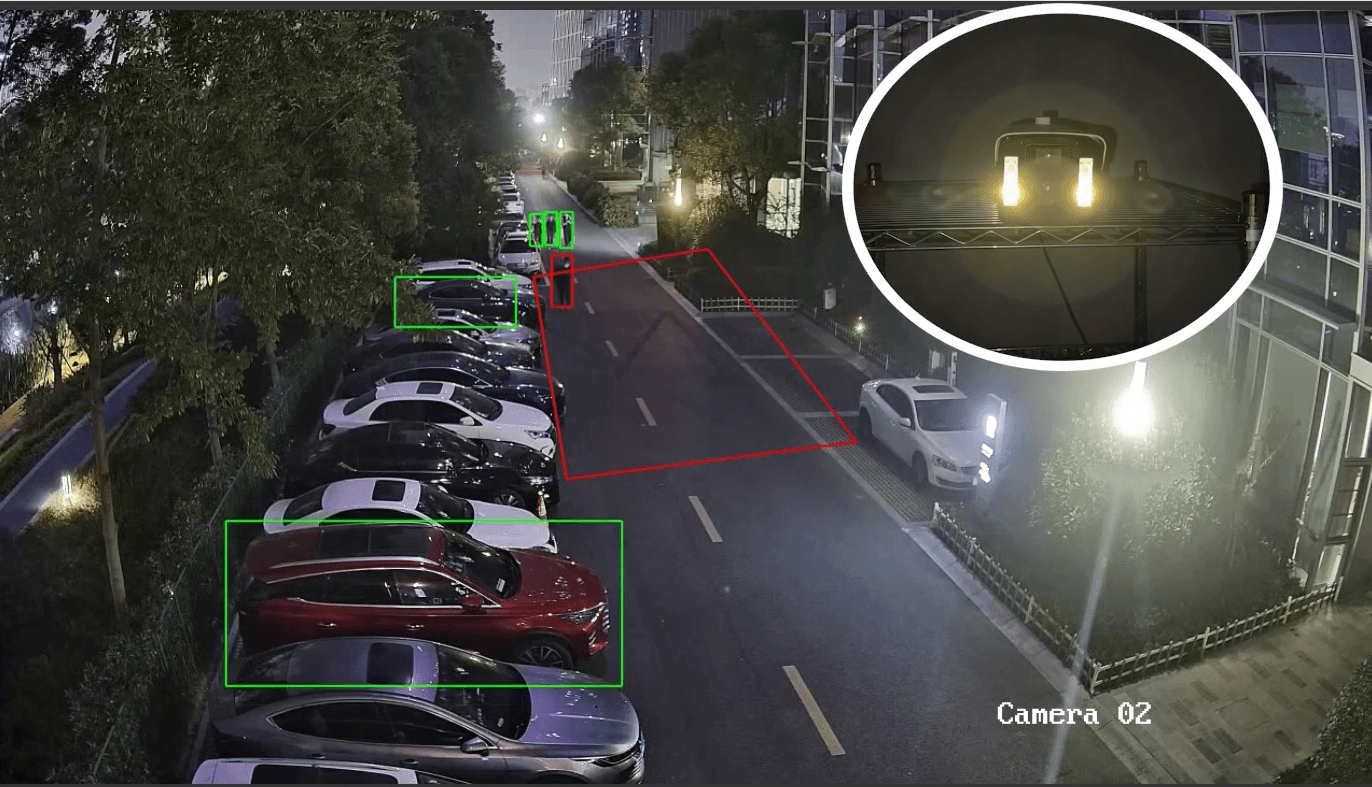
Sensors watch the approach and the boundary itself, well before contact is made. Coverage runs day and night and is not dependent on site lighting.

Intelligent Security & AI Solutions
Your boundary is the first line of defence, and the last place you want a guessing game. We design AI driven perimeter systems that detect movement early, work out what caused it, and put a verified alarm in front of a human who can act on it.
Why conventional perimeters fail
Fences, beams and basic motion cameras all detect something. The trouble is they cannot tell you what. After enough 2am callouts caused by a possum or a branch, the alarm stops being treated as an alarm, and that is the night the real intrusion happens.
The approach
An intelligent perimeter is not a single device. It is a sequence, where each stage narrows uncertainty before the next one is triggered, so the only alarms that reach a person are the ones worth acting on.
Sensors watch the approach and the boundary itself, well before contact is made. Coverage runs day and night and is not dependent on site lighting.
Deep learning analytics separate people and vehicles from animals, weather and moving vegetation, so routine activity never raises an alarm.
A camera locks on and tracks the target while strobes and live voice challenge make it clear the intruder has been seen. Many events end here.
Verified events go to our monitoring team with vision attached, then to patrol attendance, your on site staff or police as the response plan dictates.
Detection technologies
No single technology suits every boundary. We select and layer sensors around your terrain, distance, lighting and risk profile, then fuse them so one confirms the other.
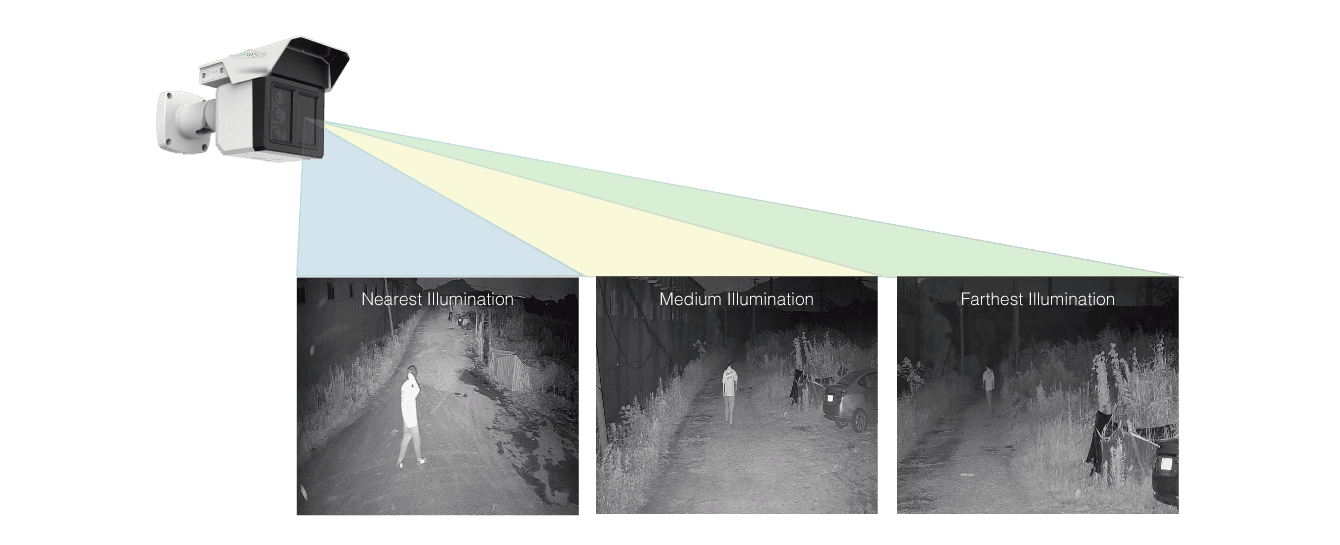
Night performance is a design decision, not a specification line. Zoned infrared and white light illumination lights the near, middle and far field independently, so a person at the fence is not blown out while a person at the treeline stays invisible. Detail holds across the full depth of the scene, which is what makes classification reliable after dark.
Cameras with on board deep learning run line crossing, intrusion zone, loitering and tailgating rules while classifying each target as a person or a vehicle. Non human movement is filtered out at the camera, before it ever becomes an alarm.
Thermal sensors read emitted heat rather than reflected light, so they hold up in total darkness, glare, fog, dust and light rain, and they see through partial cover such as scrub and fencing. Dual spectrum units pair a thermal sensor with an optical sensor in one housing, so the same device detects the heat signature and produces the identifiable image. Ideal for unlit boundaries and long open approaches.
Radar picks up movement across wide open areas with accurate range and bearing, and is largely unbothered by shadows, insects, sun and weather. It cues a camera to swing onto the target, giving detection at distance with visual confirmation.
Radar handles detection and positioning, video handles classification, tracking and verification. Requiring two independent sensors to agree before an alarm is raised is the single most effective way to cut nuisance activations.
Detects climbing, cutting and lifting in real time and reports the zone where it happened. Signal processing distinguishes an attack on the fence from wind loading and passing traffic.
A buried or fence run fibre cable turns the perimeter itself into the sensor across very long distances, with no power or network required along the line. Immune to electromagnetic interference and suited to pipelines, rail corridors and rural boundaries.
Strobe lighting, on site sirens and live audio challenge from the monitoring operator turn a passive camera into an intervention. Most opportunistic offenders leave the moment they realise they are being watched and addressed by name and description.
Where there is no power or cabling, we deploy solar powered, 4G connected units on poles, trailers or existing structures. Rapid to install, relocatable as the site changes, and equally suited to temporary works.
Recorded intelligence
Detection is only half the value of a perimeter system. The other half is what you can get back out of it at nine the next morning, when you need to establish who was on site, in which vehicle, and for how long.
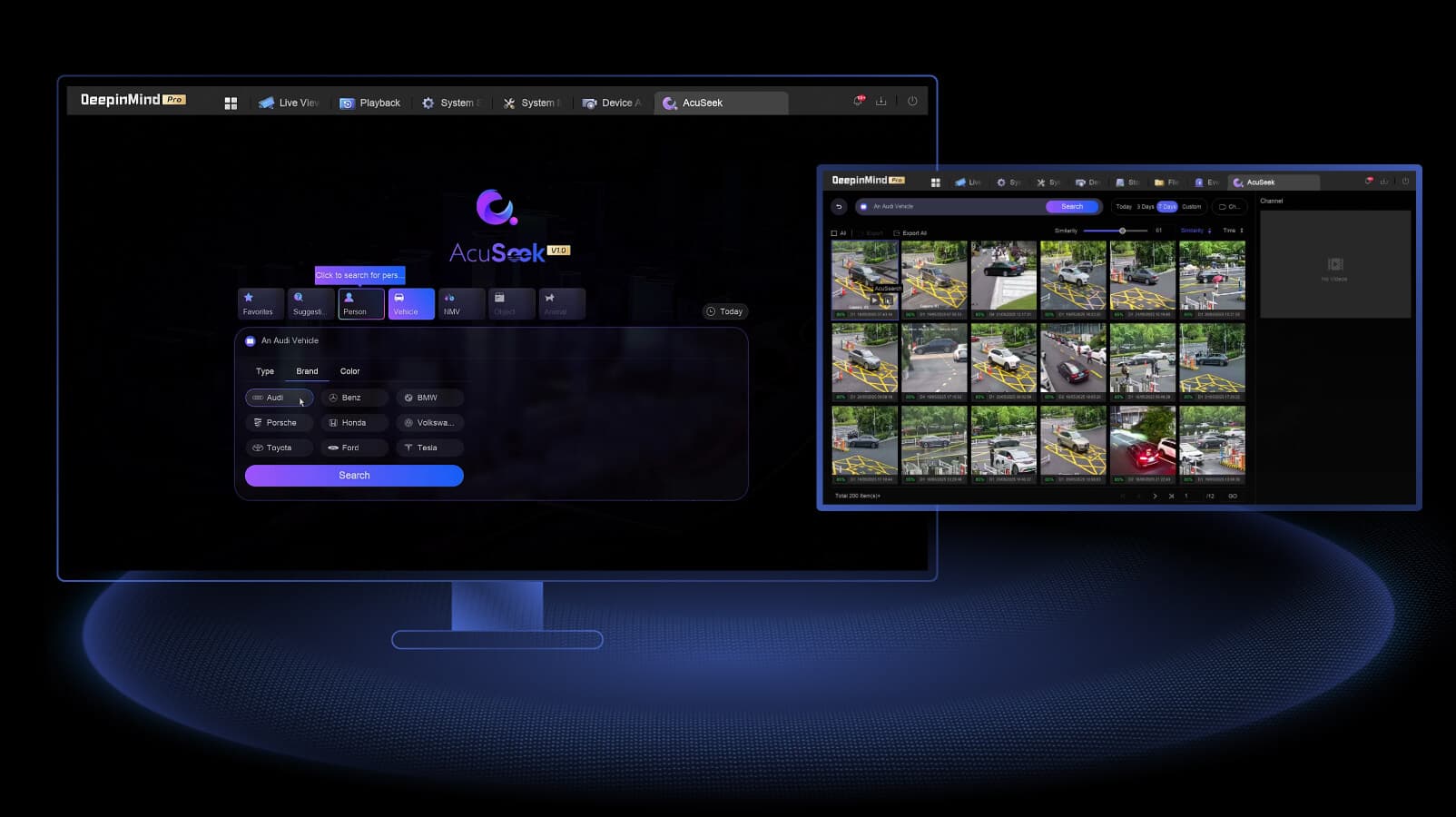
DeepinMind recorders run deep learning analysis on the recorder itself, holding classification and false alarm filtering at the storage layer rather than relying on each camera in isolation. Every person, vehicle and event is indexed as it is written to disk.
AcuSeek then lets an operator search that index in plain language. A description such as a person in a white shirt near the loading dock last night, or a white ute at the front gate on Tuesday, returns matching clips in seconds across every channel. Hours of review collapse into a single query, which matters most when an insurer or Victoria Police needs the footage today rather than next week.
Where we deploy
Every perimeter carries a different threat, a different layout and a different tolerance for interruption. The design starts with a risk assessment of your site, not a product list.
Yards, warehousing, transport depots and laydown areas where plant, stock and vehicles sit exposed overnight across a long boundary.
Substations, water assets, telecommunications sites and unmanned facilities where interference carries consequences well beyond the site itself.
Large unlit footprints with no fixed infrastructure, where copper theft and panel damage are the primary risks and response times are long.
Changing layouts, high value plant and materials, and a perimeter that needs to move as the build progresses.
After hours trespass, vandalism, graffiti and loitering across car parks, service areas and back of house entries.
Estate entries, shared car parks and boundary lines, protected with a system that recognises residents' normal movement instead of alarming on it.
What changes on site
Classification and sensor fusion strip out the wildlife, weather and lighting events that generate most activations, so the alarms that do come through are treated seriously by everyone.
Detecting on the approach rather than at the fence buys the minutes that decide whether an incident is prevented or merely recorded.
Long range thermal and radar units cover ground that would otherwise take a row of cameras, floodlighting and trenching to reach.
Every false callout avoided is a patrol hour that stays available for genuine work, and a monitoring cost that never gets billed.
Classified, time stamped and tagged events make retrieval a search rather than a night of scrubbing footage, for insurers and for police.
Systems are built in layers, so a boundary can be extended, a sensor added or a site relocated without replacing what is already installed.
Detection alone is not security
Analytics decide what deserves attention. What happens next is where a licensed security provider matters. We connect the perimeter to monitoring, to deterrence and to boots on the ground, under one agreement and one point of accountability.
Common questions
No system is absolute, and any provider claiming otherwise is selling rather than advising. What classification and sensor fusion do is remove the overwhelming majority of nuisance activations, the animals, weather and lighting events that make up most of the callout log, and put the remainder in front of an operator with vision so a human makes the final call.
Yes. Solar powered, cellular connected units are a standard part of the toolkit and are commonly used on remote assets, rural boundaries and construction sites. Fibre based sensing also runs long distances without power along the line.
Not usually. Existing recorders and cameras can often be retained and supplemented with analytics, thermal or radar at the weak points. We assess what you have before proposing anything new.
Systems are designed to cover your own boundary and approaches, with masking applied to neighbouring property and public areas where required, and signage, retention periods and access controls set up to meet Australian privacy obligations.
Yes. Perimeter detection can trigger alarm zones, lighting, gates and access control rules, and feed into a single platform so operators are not switching between systems during an event.
On systems running DeepinMind recording with AcuSeek search, an operator describes what they are looking for in ordinary language and the recorder returns matching clips across all channels in seconds, rather than working through hours of timeline by hand.
We design, install and monitor across Ballarat, Melbourne and regional Victoria, including remote and unmanned sites.
Book a site assessment and we will walk the boundary with you, identify where an intruder would realistically get in, and give you a straight recommendation with costings. No obligation.